The RACER Mailbag, June 10
Welcome to the RACER Mailbag. Questions for any of RACER’s writers can be sent to mailbag@racer.com. We love hearing your comments and opinions, but letters that include a question are more likely to be published. Questions received after 12pm ET each Monday will be saved for the following week.
Q: Could Myles Rowe be the next Conor Daly... oval specialist with a yearly Indy 500 ride?
Gordon, Dallas
MARSHALL PRUETT: I sure hope not. Conor never wanted to be pigeonholed as an oval specialist, and that’s never been Myles’ ambition. The plan since Day 1 with Roger Penske’s Race For Equality & Change has been to get a Black driver into IndyCar, and specifically, into the Indianapolis 500.
Myles was the first driver supported by Penske, then dropped as he gave Ernie Francis Jr. a try. Then both were supported, and then Francis Jr. was dropped. Rowe has been in NXT funded by Penske for the last three seasons, and it wasn’t looking good for Myles until his podium in Detroit and stupefying win at Gateway.
According to former team president Tim Cindric when we spoke about the new alliance, part of what led Penske to support AJ Foyt Racing on the technical side was to prepare for the day when a place was needed for Rowe to drive. But his slower-than-expected progress in NXT threw a wrench into that plan, and the Foyt team has filled the second seat with a Penske driver last year in David Malukas and taken a funded driver this season in Caio Collet.
Rowe’s lack of readiness on the anticipated timeline has created some serious questions as to whether he’ll be able to do more than the Indy 500 in a Penske-affiliated car. If he’d been ready after one year of NXT, he could have been run as an extra car at however many events by Foyt, but since then, Penske created the charter system and starting in 2027, teams are no longer allowed to run non-charter entries outside of the Indy 500…
As well, Collet has proven to be a serious talent and his Brazilian sponsors are understood to being more than half of the necessary budget to Foyt’s second car. If he stays with Foyt, it’s hard to see where Myles would go since it doesn’t want to split with Ferrucci, and Penske isn’t releasing Malukas, McLaughlin, or Newgarden to make way for Rowe.
So, as is hopefully obvious by now, this is far more complicated than anyone envisioned when Rowe won the USF Pro 2000 championship in 2023. At a minimum, we’ll see Myles entered in the 500. Whether it’s in a full Foyt entry or through a Foyt/HMD or Foyt/Abel alliance is unclear.
The best thing Myles can do for himself is to start winning on road and street courses. If he’s able to do that with the Abel Motorsports team, he would earn real interest within the paddock for a full complement of skills.
Being able to say a box was ticked by having Rowe become the first Black driver to race in the Indy 500 since karting prodigy George Mack in 2002 will do nothing for the sport. Being able to say he is good enough to get an offer from Dale Coyne, Zak Brown, Brad Hollinger, Mike Shank and anyone else with a seat to offer is where real progress is made.
Q: Can you remind us all again why the pits have to be closed when a yellow is initiated by race control? To me, if the yellow comes out and a car is able to brake in time to make pit lane at the pit lane speed limit, why is that a problem? It would then make the randomness of pit strategy and yellow flags being purely, well, random. I just don't get it on the grounds of safety or timing and scoring, or any other reason that I can think of.
Andy R., Detroit, MI
MP: Great question and I’m always happy to share the reminder: The pits don’t have to be closed. But that’s the choice made by IndyCar. Depending on the era, the pits have been left open and they’ve been closed. They could absolutely be left open if IndyCar decided to leave them open.
Q: Given the consternation and uncertainty surrounding the ability to support the current IndyCar hybrid, what are the odds the series decides to scrap it altogether in 2028?
Any chance IndyCar introduces BoP to allow Honda to run the V6 hybrid? Chevy can run its hybridized (or non-hybrid ) V8, etc. Would this induce additional OEMs to participate now that IndyCar is riding a wave of unprecedented post-split momentum with growing TV ratings and cultural zeitgeist stemming from the epic finish of the 500 two weeks ago?
Ya boy Jah from the ATL
MP: Scrapping it completely? Ain’t happening.
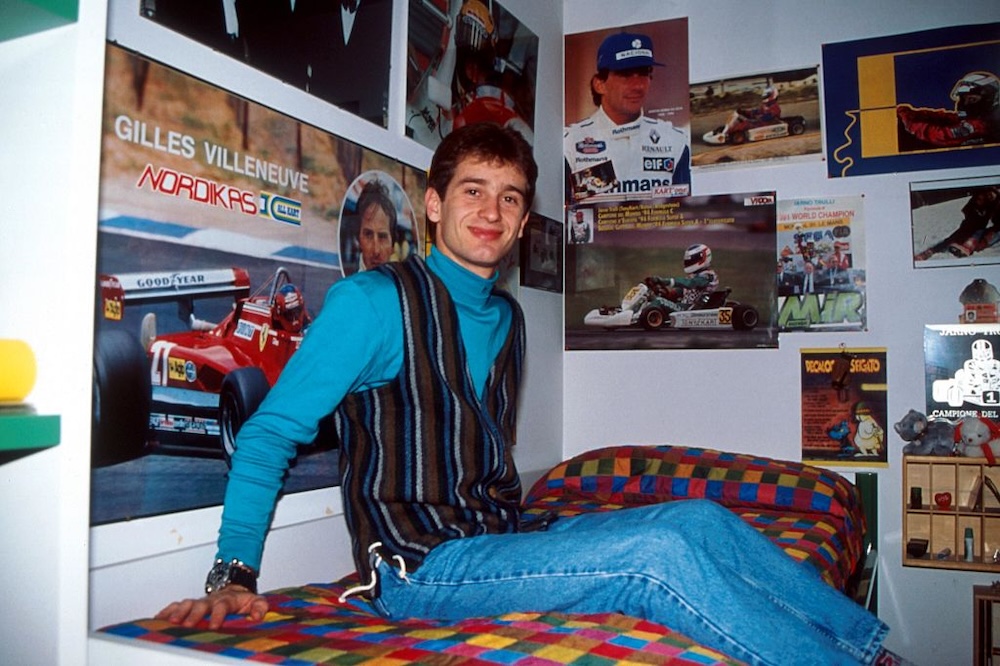
We ran out of IndyCar hybrid photos long ago, so here's Jarno Trulli in his childhood bedroom instead. Getty Images
Q: Great breakdown of the Palou penalty versus the PREMA penalty last year, and I believe more people need to understand that non-compliant does not always mean a team is cheating.
Despite a great month of May, and including the closest finish in 500 history, and exciting Indy GP and Detroit races, it would not be IndyCar without complaints. I'm typically a glass-half-full guy, but despite the positives, there are issues lurking.
The "hybrid"system: The quotation marks are in place, as that is what most people in the series do when discussing the current "hybrid" system, which is not a real hybrid system, and has no positive impact on performance at all. It is purely a marketing scheme perpetrated by the Honda marketing team, and has robbed the cars of performance. Even the new "hybrid" system is getting redesigned in advance of the new car, all the while creating issues for teams and drivers in the championship.
With Mike O'Gara in place, and with his engineering background and proficiency to rally those around him with positive energy, is there any way IndyCar (and Honda) can be persuaded to drop this bad experiment?
I know with the tires being designed for more weight, this year appears to be stuck with the anvil in the back, but maybe get rid of it for '27 as we bid farewell to the current chassis. Then, plan carefully for a smaller packaged hybrid (sans quotation marks) for the new car.
Marbles: We saw the immediate effect sweeping late in the race had on the racing at Indy, and we have also witnessed the negative effect at tracks with no yellows, which become processional. Considering the amount of work with aero, and the clear increase in entertaining racing, can Firestone work on a less marble-inducing shoes, and/or could the new car use aero, or even brushes to help move the marbles out of the way? The sweepers move at around 25 mph, and same for the blowers, and having 220+ mph earo and mechanical sweeping or moving the marbles out a half car-width on either side should be looked at in the wind tunnel. I know F1 cars used to design their cars to create dirty air for the cars behind, so I feel this concept could be integrated at some point.
What three things would you change with IndyCar if you were approached and given full control for six months?
J. Bobo
MP: I dream of a day where Mike O’Gara has the power to dictate major technical specifications, but he isn’t that guy right now as a new hire.
Three changes: Delay the 2028 car to 2029 and redesign the chassis to accept anything as short as the 2.4-liter V6 and as long as a V8. Remove the 2.4L TTV6 engine requirement. Make hybridization optional.
You can’t force manufacturers to race with a hybrid if they aren’t interested in racing with a hybrid. You can try, of course, but when you can’t get more than the same two car brands you’ve had since 2013 to supply engines, it tells you the forced hybridization plan hasn’t been embraced by the auto industry.
Complementing that, you can’t force manufacturers to build 2.4L TTV6s if they don’t want 2.4L TTV6s. You can try, but when you can’t get more than the same two car brands you’ve had since 2013 to supply engines, it tells you the forced capacity and cylinder count plan is not what the industry wants.
I get the spec chassis part and the spec tires part. But based upon the complete absence of interest from any new manufacturers in joining the supply party, the rest is a conceptual shrug from the automotive world who don’t appear to want to go where IndyCar is headed. We all hoped it would be different and a few more brands would sign up to be part of the new formula in 2028, but nobody other than Chevy and Honda is buying the product IndyCar is offering. It’s a lingering problem that needs a solution.
So, take the time to open up the car design to allow for modest differences like CART embrace where big-power turbo V6s and V8s of differing capacities fit in the same models, and if a manufacturer absolutely must have a hybrid, let them. And let those who don’t want it add ballast and run more turbo boost to match the push-to-pass power output.
Everything doesn’t have to be the same. Everything doesn’t have to be equal. Choices have benefits and consequences. Let them exist.

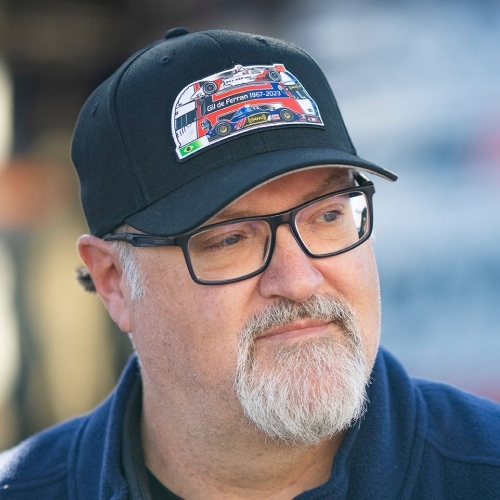
Marshall Pruett
The 2026 season marks Marshall Pruett's 40th year working in the sport. In his role today for RACER, Pruett covers open-wheel and sports car racing as a writer, reporter, photographer, and filmmaker. In his previous career, he served as a mechanic, engineer, and team manager in a variety of series, including IndyCar, IMSA, and World Challenge.
Read Marshall Pruett's articles
Latest News
Comments
Comments are disabled until you accept Social Networking Cookies. Update cookie preferences
If the dialog doesn't appear, ad-blockers are often the cause; try disabling yours or see our Social Features Support.